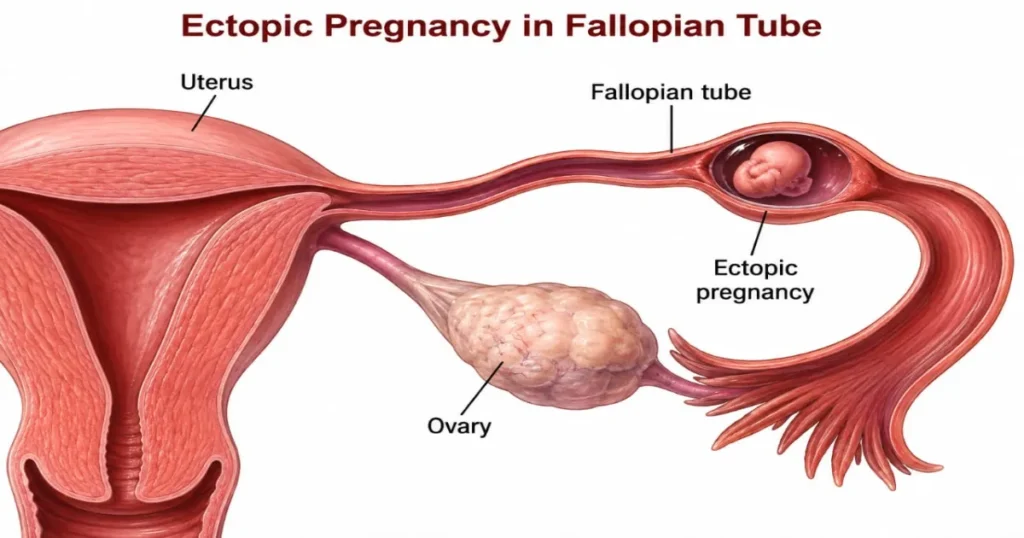
Ectopic pregnancy is a pregnancy complication in which a fertilized egg implants outside the uterus instead of attaching to the normal inner lining of the womb. In most cases, the pregnancy develops inside a fallopian tube, which is why it is often called a tubal pregnancy.
An ectopic pregnancy cannot develop normally because the fallopian tube and other locations outside the uterus do not have enough space or the appropriate conditions to support a growing pregnancy. If the condition is not diagnosed and treated in time, the fallopian tube can rupture and cause severe internal bleeding. This can become a life-threatening emergency.
Understanding the early signs, risk factors, diagnosis and treatment options can help women seek medical attention at the right time.FESS Surgery (Functional Endoscopic Sinus Surgery): Procedure, Indications, Benefits, Risks, Recovery & Cost
What Is an Ectopic Pregnancy?
In a normal pregnancy, an egg is released from the ovary and travels into the fallopian tube. If fertilization occurs, the fertilized egg continues moving toward the uterus. It normally implants in the lining of the uterus, where the pregnancy develops.
In an ectopic pregnancy, the fertilized egg implants somewhere outside the uterine cavity. The most common location is the fallopian tube.
Less commonly, an ectopic pregnancy may occur in the ovary, cervix, abdominal cavity or a previous cesarean-section scar.
Because these locations cannot safely support the growth of a pregnancy, ectopic pregnancy requires medical evaluation and appropriate treatment.
Where Does Ectopic Pregnancy Occur?
Most ectopic pregnancies occur in the fallopian tube. Depending on the location, they may be described as:
- Tubal ectopic pregnancy
- Ovarian ectopic pregnancy
- Cervical ectopic pregnancy
- Abdominal ectopic pregnancy
- Cesarean-scar ectopic pregnancy
Tubal ectopic pregnancy is by far the most common type.
What Causes Ectopic Pregnancy?
In many cases, it is not possible to identify one specific cause. However, certain conditions can increase the likelihood of an ectopic pregnancy.
1. Damage to the Fallopian Tubes
Inflammation, infection, scarring or previous surgery can affect the normal movement of the fertilized egg through the fallopian tube. If the tube is damaged or narrowed, the embryo may become implanted before reaching the uterus.
2. Pelvic Inflammatory Disease
Pelvic inflammatory disease (PID), often associated with untreated sexually transmitted infections such as chlamydia or gonorrhea, can cause inflammation and scarring of the reproductive organs.
Damage caused by PID can increase the risk of ectopic pregnancy.
3. Previous Ectopic Pregnancy
A woman who has experienced an ectopic pregnancy previously has a higher risk of another ectopic pregnancy in the future. For this reason, early monitoring is particularly important during subsequent pregnancies.
4. Previous Fallopian Tube Surgery
Surgery involving the fallopian tubes may sometimes alter their structure or function. This can increase the possibility of abnormal implantation.
5. Fertility Treatment
Some fertility treatments, including assisted reproductive technologies such as IVF, may be associated with an increased risk of ectopic pregnancy. Women undergoing fertility treatment should therefore receive appropriate early pregnancy monitoring.
6. Smoking
Smoking has been associated with an increased risk of ectopic pregnancy and can negatively affect reproductive health.
7. Increasing Maternal Age
The risk of ectopic pregnancy may increase with age, although ectopic pregnancy can occur in women of reproductive age.
Symptoms of Ectopic Pregnancy
Early ectopic pregnancy may not cause obvious symptoms. Some women initially experience symptoms similar to those of a normal pregnancy.
Possible early symptoms include:
– Missed menstrual period
– Positive pregnancy test
– Mild abdominal or pelvic pain
– Vaginal spotting or bleeding
– Breast tenderness
– Nausea
– Fatigue
– Discomfort on one side of the abdomen
Symptoms can vary from person to person, and some women may have very few symptoms during the early stages.
Warning Signs of a Ruptured Ectopic Pregnancy
As an ectopic pregnancy grows, it can stretch and eventually rupture the fallopian tube. This can cause internal bleeding and requires immediate medical attention.
Emergency symptoms may include:
– Sudden and severe abdominal or pelvic pain
– Severe pain mainly on one side
– Shoulder-tip pain
– Dizziness or light-headedness
– Fainting or collapse
– Severe weakness
– Heavy vaginal bleeding
– Pale, clammy skin
– Rapid heartbeat
Severe abdominal pain accompanied by dizziness, fainting or weakness should be treated as a medical emergency.
Do not wait for the symptoms to disappear. Immediate assessment at an emergency department is necessary.
How Is Ectopic Pregnancy Diagnosed?
Diagnosing ectopic pregnancy usually involves a combination of medical history, physical examination, blood tests and ultrasound.
Pregnancy Test
A urine or blood pregnancy test can confirm pregnancy. However, a positive pregnancy test does not tell whether the pregnancy is located inside the uterus.
Beta-hCG Blood Test
Doctors may measure the level of human chorionic gonadotropin (β-hCG) in the blood.
The hCG level may be repeated over time to assess how the pregnancy is developing. The pattern of hCG changes can provide useful information, but a single hCG value cannot by itself confirm or exclude an ectopic pregnancy.
Transvaginal Ultrasound
A transvaginal ultrasound (TVS) is an important diagnostic test.
The ultrasound can help determine whether a pregnancy is visible inside the uterus. Doctors may also look for an abnormal mass around the fallopian tube or fluid in the pelvis that could indicate internal bleeding.
In a very early pregnancy, it may not be possible to see the pregnancy clearly on ultrasound. In such situations, repeat ultrasound and serial hCG measurements may be recommended.
Treatment Options for Ectopic Pregnancy
Treatment depends on several factors, including:
– Symptoms and clinical stability
– Whether the ectopic pregnancy has ruptured
– β-hCG levels
– Ultrasound findings
– Size and location of the ectopic pregnancy
– Overall health
– Future fertility plans
The main approaches are expectant management, medication and surgery.
1. Expectant Management
In selected cases, an ectopic pregnancy may resolve naturally without medication or surgery.
Expectant management may be considered when the patient is clinically stable, symptoms are minimal or absent, and pregnancy hormone levels are falling appropriately.
Close follow-up is essential. Regular blood tests are usually required to ensure that the hCG level continues to decrease.
Expectant management is not appropriate for every ectopic pregnancy.
2. Methotrexate Treatment
Methotrexate is a medication that can be used to treat certain unruptured ectopic pregnancies.
It works by stopping the growth of rapidly dividing pregnancy tissue. The body can then gradually absorb the remaining pregnancy tissue.
Before methotrexate treatment, the doctor evaluates the patient’s symptoms, blood tests, ultrasound findings and other medical factors to determine whether the treatment is appropriate.
After treatment, regular β-hCG testing is essential to confirm that the pregnancy tissue is resolving.
Methotrexate is not suitable in every situation. For example, a ruptured ectopic pregnancy with significant internal bleeding generally requires urgent surgical treatment.
3. Surgery for Ectopic Pregnancy
Surgery may be necessary if the ectopic pregnancy has ruptured, there is significant internal bleeding, medical treatment is unsuitable or the pregnancy is not resolving appropriately.
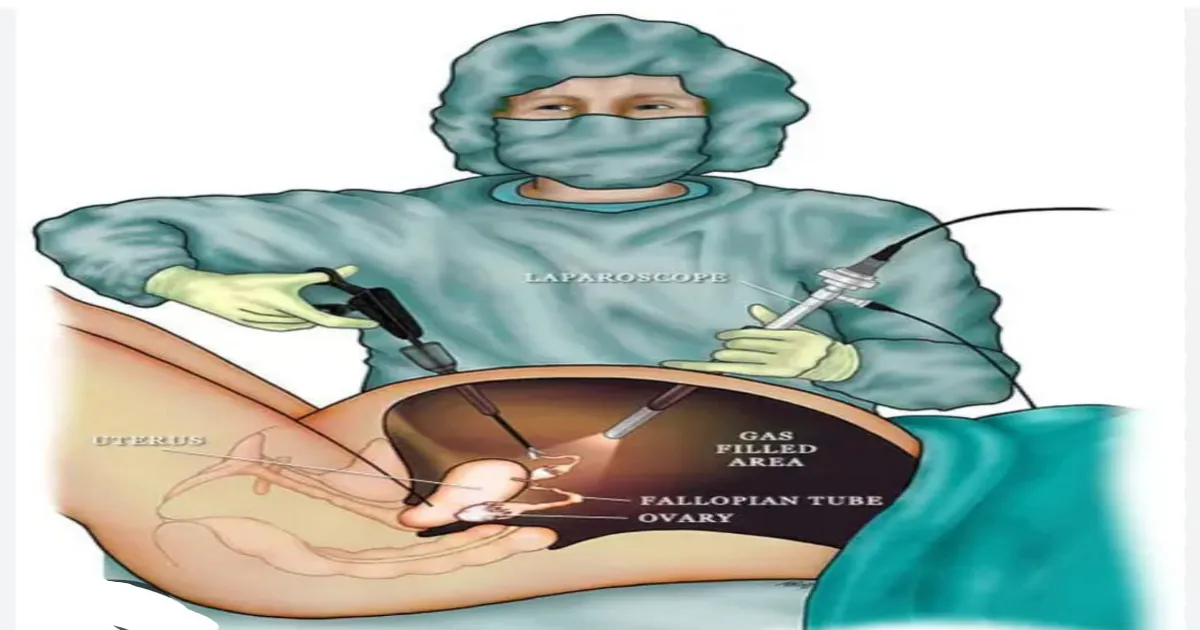
Laparoscopic surgery is commonly used when the patient’s condition allows it. In severe emergencies, an open surgical procedure called a laparotomy may be required.
Salpingectomy
A salpingectomy involves removing the affected fallopian tube or the affected portion of the tube, depending on the circumstances.
Salpingostomy
In selected cases, the ectopic pregnancy can be removed while leaving the fallopian tube in place. This procedure is called salpingostomy.
The choice between procedures depends on factors such as the extent of tubal damage, bleeding, the condition of the other fallopian tube and the patient’s future fertility considerations.
Can You Get Pregnant After an Ectopic Pregnancy?
Yes. Many women can have a healthy pregnancy after an ectopic pregnancy.
Future fertility depends on several factors, including the condition of the remaining fallopian tube, previous pelvic infections, tubal damage, age and other fertility-related factors.
Even if one fallopian tube has been removed, natural pregnancy may still be possible if the other tube is healthy.
However, women who have had an ectopic pregnancy should contact their healthcare provider early after a future positive pregnancy test. Early ultrasound can help confirm that the new pregnancy is developing in the uterus.
How Can Ectopic Pregnancy Be Prevented?
Not every ectopic pregnancy can be prevented. However, reducing certain risk factors may help protect reproductive health.
Important measures include:
– Practicing safer sex
– Preventing and treating sexually transmitted infections
– Seeking timely treatment for pelvic infections
– Avoiding smoking
– Attending early pregnancy check-ups
– Following medical advice after fertility treatment
– Informing the doctor about any previous ectopic pregnancy
Early pregnancy assessment is particularly important for women with a previous ectopic pregnancy or other risk factors.
When Should You See a Doctor?
Anyone with a positive pregnancy test and significant abdominal or pelvic pain should seek medical evaluation.
Urgent medical attention is especially important if pregnancy is accompanied by:
– Severe abdominal pain
– One-sided pelvic pain
– Vaginal bleeding
– Shoulder-tip pain
– Dizziness
– Fainting
– Severe weakness
These symptoms can indicate internal bleeding from a ruptured ectopic pregnancy.
Conclusion
Ectopic pregnancy is a serious pregnancy complication in which a fertilized egg implants outside the uterus, most commonly inside a fallopian tube. Although it can be dangerous, early diagnosis and appropriate treatment can significantly reduce the risk of serious complications.
Symptoms may initially resemble those of a normal pregnancy, so medical assessment is important when pregnancy is associated with abdominal pain or vaginal bleeding. Pregnancy testing, serial β-hCG measurements and transvaginal ultrasound are commonly used to evaluate suspected ectopic pregnancy.
Depending on the individual situation, treatment may involve careful observation, methotrexate medication or surgery. A ruptured ectopic pregnancy with internal bleeding is an emergency and requires immediate treatment.
Most importantly, women should not ignore severe pain, dizziness, fainting or bleeding during early pregnancy. Prompt medical care can be lifesaving.
Medical Disclaimer: This article is intended for general educational purposes only and should not be used as a substitute for professional medical advice, diagnosis or treatment. If you suspect an ectopic pregnancy or develop severe symptoms during pregnancy, seek urgent medical care from a qualified healthcare professional.
Septoplasty Surgery: Procedure, Recovery & Cost in India Explained
NBA Schedule 2026-27: Christmas Day Rivalries, Ring Night and the Games to Watch