Tonsillectomy Surgery in Adults vs Children
Tonsillectomy surgery is one of the most commonly performed ear, nose, and throat (ENT) procedures worldwide. While many people associate the operation with childhood, adults also undergo tonsil removal for chronic infections, breathing disorders, or other medical conditions. However, tonsillectomy surgery in adults vs children differs significantly in terms of indications, recovery, complications, pain levels, and overall outcomes.
Understanding these differences helps patients and families make informed healthcare decisions. This article explains why tonsillectomy is performed, how the surgery differs between children and adults, what to expect during recovery, and when medical attention is necessary.
What Is Tonsillectomy Surgery?
A tonsillectomy is a surgical procedure performed to remove the palatine tonsils, two oval-shaped masses of lymphoid tissue located at the back of the throat. The tonsils are part of the body’s immune system and help fight infections during early childhood. As a person grows older, their immune function is gradually taken over by other lymphoid tissues, making the tonsils less essential.
Today, tonsillectomy is recommended only when the expected benefits outweigh the potential risks.
Why Is Tonsillectomy Performed?
Doctors may recommend tonsil removal when patients experience:
- Frequent bacterial tonsillitis despite appropriate treatment
- Enlarged tonsils causing breathing or swallowing difficulties
- Obstructive sleep apnea due to enlarged tonsils
- Recurrent peritonsillar abscess
- Suspicion of tonsillar tumors or malignancy (especially in adults)
- Chronic bad breath caused by tonsil stones that does not respond to conservative treatment
The reasons for surgery often differ between adults and children.
Tonsillectomy Surgery in Children
Children account for the majority of tonsillectomy procedures performed worldwide.
Common Reasons for Surgery in Children
The most frequent indications include:
- Recurrent throat infections
- Enlarged tonsils causing obstructive sleep apnea
- Difficulty swallowing food
- Poor sleep quality due to airway obstruction
- Growth delay associated with sleep-disordered breathing
Many children experience loud snoring, restless sleep, mouth breathing, daytime tiredness, or behavioral issues because enlarged tonsils block the airway during sleep.
Once the tonsils are removed, breathing often improves significantly, leading to better sleep, improved concentration, healthier growth, and enhanced quality of life.
Recovery in Children
Recovery is generally quicker than in adults.
Most children:
- Return home the same day
- Resume normal eating within one to two weeks
- Experience mild to moderate throat pain
- Recover faster because children’s tissues heal more rapidly
Parents are advised to ensure adequate hydration, administer prescribed pain medication, and monitor for bleeding.
Tonsillectomy Surgery in Adults
Although less common, adult tonsillectomy is becoming increasingly frequent due to recurrent infections and sleep-related breathing disorders.
Common Reasons for Surgery in Adults
Adults typically undergo surgery for:
- Chronic recurrent tonsillitis
- Multiple antibiotic-resistant infections
- Peritonsillar abscess
- Severe snoring with obstructive sleep apnea
- Suspicion of cancer in one enlarged tonsil
- Persistent tonsil stones causing discomfort and bad breath
Adults often seek surgery after years of repeated infections that interfere with work, daily activities, and quality of life.
Recovery in Adults
Recovery after adult tonsillectomy is generally more difficult.
Patients commonly experience:
- Severe throat pain lasting up to two weeks
- Pain while swallowing
- Ear pain due to referred nerve pathways
- Reduced appetite
- Weight loss
- Fatigue
Adults usually require a longer recovery period before returning to work compared to children.
Maintaining hydration remains one of the most important aspects of recovery because dehydration can worsen pain and increase complications.
Tonsillectomy Surgery in Adults vs Children: Major Differences
Although the surgical procedure itself is similar, the experience differs considerably.
1. Reason for Surgery
Children usually undergo surgery because enlarged tonsils interfere with breathing or cause repeated infections.
Adults more commonly require surgery due to chronic infections, abscesses, persistent tonsil stones, or suspected tumors.
2. Recovery Time
Children typically recover within 7–10 days.
Adults often require 10–14 days or longer before returning to normal activities.
3. Pain
Pain tends to be significantly greater in adults because adult tissues heal more slowly and nerve sensitivity is higher.
Children generally tolerate recovery better with proper pain management.
4. Bleeding Risk
Postoperative bleeding can occur in both groups but is generally more common in adults.
Any fresh bleeding from the mouth after surgery requires immediate medical evaluation.
5. Return to Daily Activities
Children usually resume school within two weeks.
Adults may need additional recovery time depending on their occupation and overall health.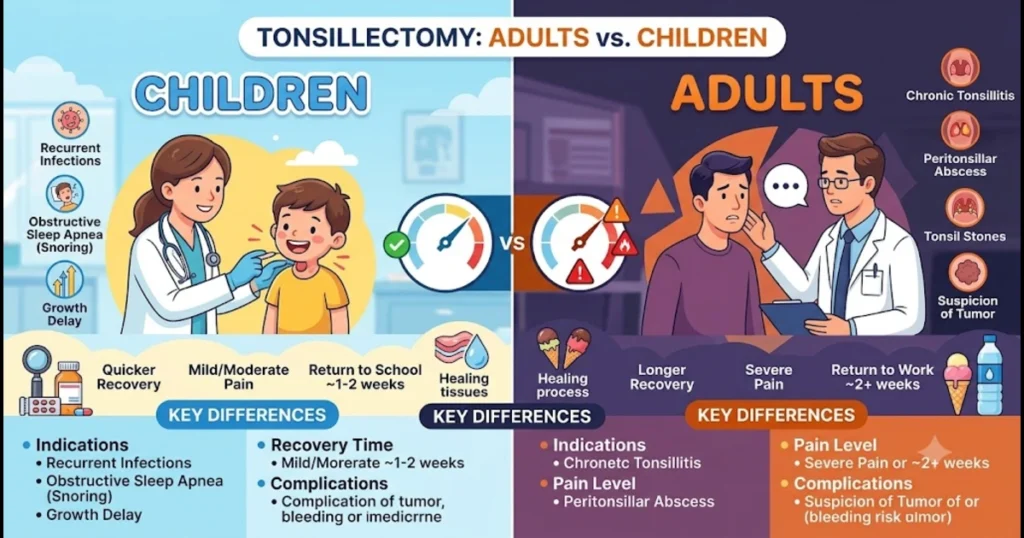
How Is Tonsillectomy Performed?
Modern tonsillectomy is performed under general anesthesia.
Several surgical techniques may be used, including:
- Cold steel dissection
- Electrocautery
- Coblation surgery
- Harmonic scalpel
- Radiofrequency-assisted techniques
The choice depends on the surgeon’s experience, patient factors, and hospital facilities.
The operation generally takes 30 to 60 minutes, and most patients are discharged on the same day unless observation is required.
Benefits of Tonsillectomy
When performed for appropriate medical indications, tonsillectomy can provide substantial long-term benefits.
These include:
- Fewer throat infections
- Better sleep quality
- Improved breathing
- Reduced snoring
- Improved swallowing
- Better school performance in children with sleep-disordered breathing
- Improved productivity in adults suffering from chronic infections
- Better overall quality of life
Possible Risks and Complications
Like every surgical procedure, tonsillectomy carries certain risks.
Potential complications include:
- Bleeding
- Infection
- Pain
- Temporary difficulty swallowing
- Dehydration
- Reaction to anesthesia
- Delayed postoperative hemorrhage
Fortunately, serious complications remain uncommon when surgery is performed by experienced ENT surgeons and postoperative instructions are carefully followed.
Recovery Tips After Tonsillectomy
Proper postoperative care promotes faster healing.
Patients should:
- Drink plenty of fluids
- Take prescribed medications on time
- Eat soft, cool foods initially
- Avoid spicy and hard foods
- Get adequate rest
- Avoid smoking
- Avoid strenuous exercise until cleared by the surgeon
Children should be supervised closely during recovery to ensure they remain hydrated.
When Should You Seek Immediate Medical Care?
Medical attention should be sought immediately if any of the following occur:
- Bright red bleeding from the mouth or throat
- Persistent vomiting
- High fever
- Difficulty breathing
- Severe dehydration
- Inability to swallow fluids
- Uncontrolled pain despite medication
Prompt treatment can prevent serious complications.
Is Tonsillectomy Always Necessary?
No. Most sore throats and episodes of tonsillitis improve with medication and supportive care.
Doctors usually recommend surgery only after evaluating:
- Frequency of infections
- Severity of symptoms
- Impact on daily life
- Presence of sleep apnea
- Failure of conservative treatment
- Risk of complications
Individual assessment by an ENT specialist is essential before deciding on surgery.
Conclusion
The debate surrounding tonsillectomy surgery in adults vs children highlights that while the procedure is fundamentally the same, the reasons for surgery, recovery experience, and complication rates differ considerably. Children usually undergo tonsillectomy to improve breathing and reduce recurrent infections, whereas adults often require surgery for chronic tonsillitis, recurrent abscesses, or other persistent problems.
Children generally recover faster and experience less postoperative pain, while adults should expect a longer and more uncomfortable recovery period. Regardless of age, careful patient selection, skilled surgical care, and proper postoperative management contribute to excellent outcomes. Individuals experiencing recurrent throat infections or symptoms suggestive of enlarged tonsils should consult a qualified ENT specialist to determine whether tonsillectomy is the most appropriate treatment option.
Disclaimer: This article is intended for general awareness and educational purposes only. It should not be considered a substitute for professional medical advice, diagnosis, or treatment. Always consult a qualified ENT specialist or healthcare provider regarding any medical condition or treatment decisions.